
ALL WRITE NOW, Episode #30
The Healing Powers of Hawks, Hares & Westies

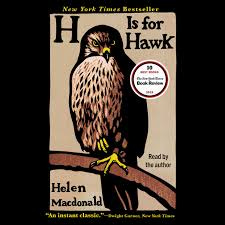
On my recent Delta flight to NYC, I was debating whether to watch Hamnet or Wuthering Heights when I discovered, to my surprise and utter joy, that H is for Hawk has been made into a movie. Starring Clair Foy, an actress I have adored since seeing her in The Crown. How had I missed this?
I typically am reticent to watch a movie made from a book I love—they never live up—but I was on a plane with hours ahead of me. The movie was true to the book and Clair Foy did a wonderful job but the movie did not capture the multiple layers contained in Macdonald’s breathtaking prose.
When I was in grad school, I was utterly obsessed (as was my faculty mentor) with Helen Macdonald’s brilliant memoir about navigating the wilderness of grief following the sudden death of her father. H is for Hawk captivated me on so many levels. The nature. The transitions. The language. The history. The metaphors. The relationship between human and animal. The pure, raw, emotion. Not only was it the sole topic of my graduate thesis, but some months after obtaining my MFA, I had the chance to meet Helen Macdonald and hand her a copy of my thesis. A big moment for a fledgling writer.
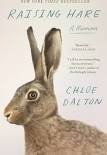
I have read a lot of good books since then. But it wasn’t until I read Raising Hare last month (highly recommended by my friend Cici) that I encountered a book that moved me to the same degree. Another elegant, probing, insightful memoir about a relationship between human and wild animal. Have you read it? Author Chloe Dalton, in gorgeous prose, offers us a close up of the unlikely relationship that develops between her and a wild hare during the pandemic. I was hooked from the first page.
Most of us have read, loved, or sobbed through animal-inspired stories: Charlotte’s Web, Old Yeller, Black Beauty, The Call of the Wild. And, oh dear, Bambi. Why do we love them so much? For me, these stories offer a safe, heart-warming, and universal way to explore the depth of human emotion, mortality, and relationships. They give us the opportunity to stretch our imaginations, to “think like an animal”, thus bridging the gap with the natural world. They take us to new discoveries about ourselves. They offer insight into a range of human attributes while providing relief from human suffering.
One of the things that struck me about Dalton’s narrative is that she never aimed to turn her hare into a domestic pet. She neither tamed her nor named her. She took great care to research the hare’s habits and needs, following her cues whenever possible. As a result, the bond that emerged between the two of them was built on a sense of deeply attentive respect.
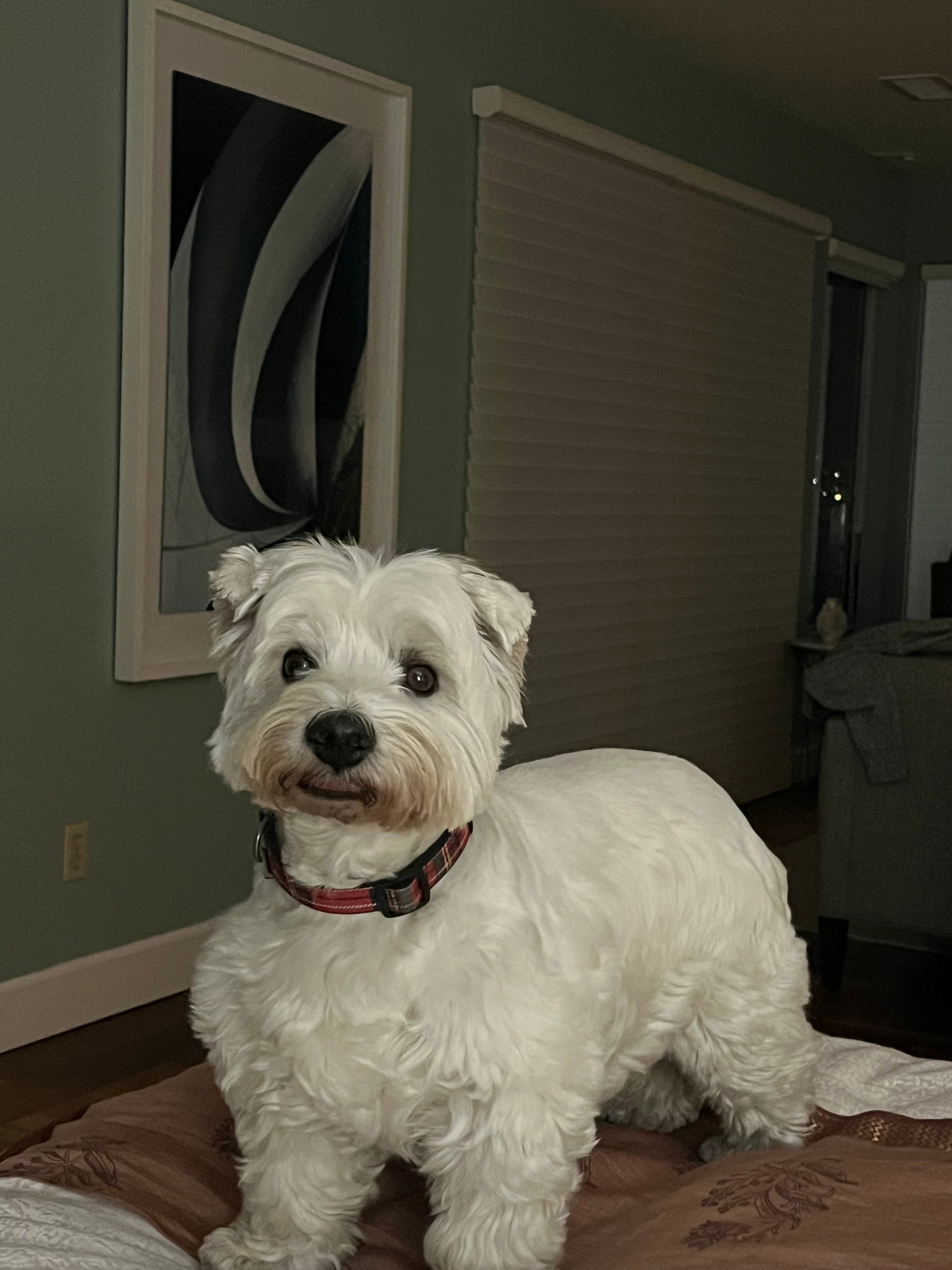
In each of these memoirs, we witness a singular, therapeutic bond between human and animal. Which makes me realize I have one of those! Not in the form of a hawk or a hare but in the form of my Westie, Hamish. My dog, though affectionate, is not a lap lounger. He marches to the beat of his own drum and interaction is mostly on his terms. Yet, he has a particular canine charisma that I have never before seen, a gravitational pull that puts everyone at ease. Put an anxious/distressed person or dog in Hamish’s path and they emerge renewed. People have even told me, after interacting with him, “I don’t need to go to therapy today now that I’ve met Hamish.”
Every day with Hamish is a good day.
Today’s Prompt
Has an animal ever changed your life? Helped you see the world through different eyes? Have you had a particular experience you can relate about how an animal shifted your perspective? It might be a hummingbird that flits through your garden or a stray cat that walks by your window every morning. What is the story you want to tell?
NOW, GO WRITE!
XX
Megan